If I Sell My House in Springfield, Where Can I Afford to Move Next?
You've been thinking about selling your Springfield home, but there's one question holding you back: Where would you go next, and what could you actually afford?
The answer depends on more than your home's selling price. You'll need to consider how much money you'd have after the sale, what your next monthly payment might look like, and which homes are available within your budget.
At Graddy Real Estate, we help homeowners look at both sides of that decision before making a move. Here's how to get a clearer picture of your options.
What Will You Actually Have After Selling Your House?
Your home's value isn't necessarily the amount you'll have available for your next purchase.
Home equity is generally the difference between your property's market value and what you owe on loans secured by it. Your net proceeds are what remains after those loans and applicable selling expenses are paid at closing.
Here's how that might work for a Springfield homeowner.
An example of how the numbers work
Imagine you own a Springfield home that could sell for approximately $300,000.
Here's a hypothetical breakdown:
| Item | Amount |
|---|---|
| Expected selling price | $300,000 |
| Remaining mortgage payoff | -$175,000 |
| Estimated selling expenses | -$20,000 |
| Estimated net sale proceeds | $105,000 |
The $20,000 expense figure is illustrative, not a standard selling fee. Actual costs depend on the transaction and may include negotiated compensation, title-related expenses, concessions, and other applicable charges.
In this example, you have approximately $125,000 in equity before selling expenses, but your estimated proceeds are $105,000.
Now suppose you want to reserve $20,000 for moving expenses, purchase closing costs, and unexpected needs.
That leaves approximately $85,000 potentially available for a down payment.
This doesn't mean you automatically qualify for a particular home price. It simply gives you a more useful starting point.
Before relying on these figures, you'll want an accurate mortgage payoff estimate and a realistic assessment of what your home could sell for.
Our home-selling services include evaluating comparable properties and developing a pricing strategy based on current market conditions.
Your Next Home Budget Starts With the Monthly Payment
One of the biggest surprises for homeowners moving after several years is that their next mortgage payment may look very different from their current one.
You might have purchased your Springfield home when prices or mortgage rates were lower. Even if you've built considerable equity, buying another property means evaluating today's financing terms.
Could a cheaper house still cost more each month?
Yes.
Imagine selling a $350,000 home and purchasing one for $300,000.
The replacement property costs less, but your new mortgage payment could still be higher depending on your loan amount, interest rate, and repayment term. Property taxes and insurance can also change.
That's why it's important to evaluate the full monthly housing expense, not just the purchase price.
Your next-home budget should account for:
- Mortgage principal and interest
- Property taxes
- Homeowners insurance
- Mortgage insurance, if applicable
- Homeowners association dues, if applicable
- Expected maintenance and utility expenses
The Consumer Financial Protection Bureau recommends considering your complete housing payment and broader financial priorities when determining what you can comfortably afford.
What a lender approves isn't necessarily your ideal budget
A mortgage lender can help determine what financing you may qualify for based on income, debt, credit, available funds, and other requirements.
But qualifying for a certain amount doesn't mean you have to spend that much.
You may want room in your budget for retirement savings, travel, family expenses, home improvements, or other priorities.
A useful question is not simply, "What's the most expensive home I can buy?"
It's, "What monthly payment would allow me to enjoy my next home without feeling financially stretched?"
What Costs Should You Plan for When Buying Again?
A down payment is only one part of purchasing another home.
According to the Consumer Financial Protection Bureau, buyer closing costs commonly range from approximately 2% to 5% of the purchase price, excluding the down payment. Your actual expenses will depend on your loan, property, and transaction.
You'll also want to consider moving expenses, immediate repairs, and how much cash you'd prefer to keep available after closing.
If you're comparing homes in Springfield, Nixa, Ozark, or Republic, remember that property taxes can differ depending on the property's location and applicable taxing districts. Greene County and Christian County properties don't necessarily have identical tax obligations, and school district boundaries can also affect the total.
Review the specific property's tax information rather than assuming your next home's taxes will resemble what you're currently paying.
Before putting all your proceeds toward the next down payment, think about what you'll need during the move and after you settle in. Keeping some cash available may be just as important as reducing your new mortgage balance.
Where Could You Move Around Springfield?
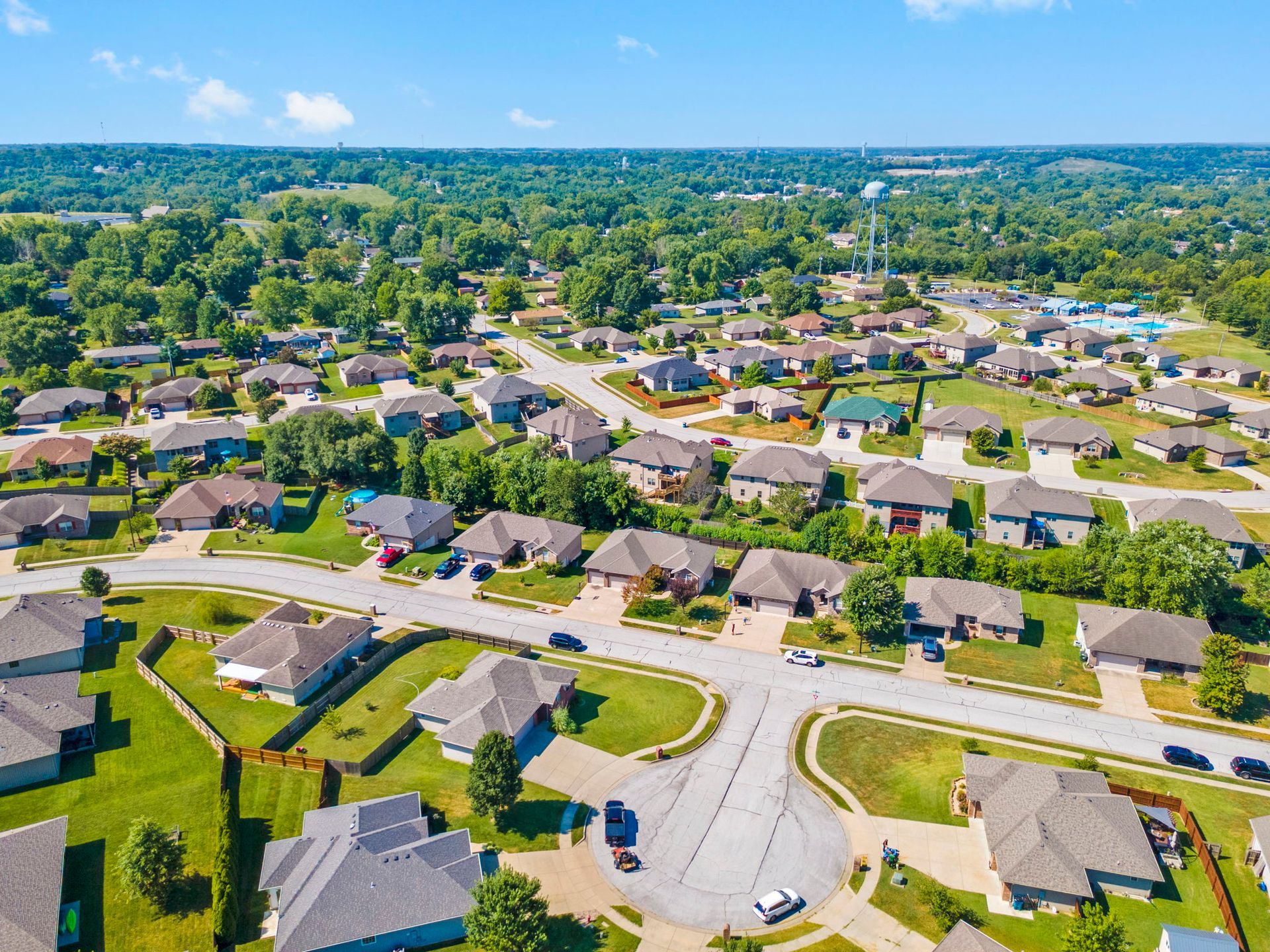
Once you know what you're comfortable spending, the next question is what that budget can buy in Springfield and the surrounding communities.
You may find that staying in Springfield makes sense. Or you might discover that a home in Nixa, Ozark, or Republic better matches what you're looking for.
In October 2026, Realtor.com reported a median listing price of $314,850 for Springfield, Missouri.
That provides some context for the local market, but a citywide median doesn't tell you which homes are available within your budget or whether they meet your needs.
A $275,000 property and a $350,000 property may differ considerably in size, age, condition, and location.
Exploring different Springfield neighborhoods
You may not need to leave Springfield to find a home that better fits your budget or lifestyle.
Someone considering an established neighborhood near Phelps Grove or Rountree may be looking for something different from a buyer exploring Southern Hills or newer residential areas in south Springfield.
Home age, layout, condition, and available inventory can vary even within the same city.
Comparing Springfield, Nixa, Ozark, and Republic
If you're considering a move within Southwest Missouri, your search may extend beyond Springfield.
A Springfield homeowner considering Nixa might be looking for a different neighborhood setting or proximity to family in Christian County. Someone exploring Ozark may be comparing homes near the US-65 corridor, while Republic could appeal to a buyer whose work or daily activities are concentrated on the west side of the Springfield area.
Those location preferences matter, but they don't automatically make one community more affordable than another. Comparing actual listings, property conditions, commuting needs, and monthly ownership costs provides a more useful picture.
Consider questions such as:
- How much living space do you need?
- Would you prefer an established neighborhood or newer construction?
- Is a shorter commute more important than additional square footage?
- Do you want a larger yard or less exterior maintenance?
- Are there specific accessibility or layout features you need?
A home with a lower asking price may require more repairs. Another property might cost more upfront but better match your long-term needs.
Our home-buying services can help you explore available properties and evaluate how different options fit your goals.
How Your Reason for Moving Changes the Decision
Not every homeowner is selling for the same reason. Your next move should influence how you evaluate affordability.
Moving into a larger home
Maybe your family needs another bedroom, a dedicated office, or more outdoor space.
A larger home could meet those needs, but consider the additional mortgage payment and ongoing maintenance.
It may help to separate features you genuinely need from those you'd simply enjoy having.
Downsizing to simplify your lifestyle
Downsizing isn't always about finding the least expensive home. You may be looking for fewer stairs, a smaller yard, or a layout that's easier to maintain.
Compare how well the available homes meet those needs alongside their total ownership costs. A smaller property isn't necessarily a better fit simply because it has less square footage.
Should You Find Your Next Home Before Listing?
If you haven't explored replacement homes, it's reasonable to hesitate before putting your current property on the market.
You don't have to find your next house before listing, but you should know whether homes that meet your needs are available within your budget.
The order of the transactions matters, too.
Some homeowners need proceeds from their current sale to purchase another property. Others may have financing options that allow them to buy first.
Each approach has different financial and timing considerations.
For a closer look at those decisions, see our guide on buying a home before selling your current house.
The important thing is to avoid making commitments based on an assumed selling price, an unconfirmed mortgage approval, or a replacement home you haven't researched.
Five Steps to Build a Realistic Moving Plan
If you're wondering whether selling your Springfield home would make financial sense, you can begin exploring your options without committing to a listing date.
- Estimate your home's likely selling price. Review comparable properties and current competition rather than relying on an automated estimate alone.
- Calculate your potential net proceeds. Account for mortgage payoff amounts, applicable selling expenses, and other obligations that may affect what you receive.
- Discuss your financing options. Speak with a mortgage lender about qualification requirements, down payment choices, and your expected monthly housing payment.
- Explore homes within a comfortable budget. Compare actual properties in Springfield and nearby communities, considering condition, location, and ongoing expenses.
- Develop a timeline for both transactions. Consider when you'd like to move, whether you need your sale proceeds first, and what happens if your current home sells before you find another.
These steps can help you decide whether moving now makes sense or whether you'd benefit from more time to prepare.
Frequently Asked Questions
Can I use all the money from selling my house as a down payment?
Potentially, but you'll need to account for purchase closing costs, moving expenses, and any cash reserves you want to maintain. Your lender can also explain how different down payment amounts affect your financing.
What if I sell my Springfield home but can't find another house I want?
That's a concern worth discussing before listing. Review available homes, your financing options, and how flexible your moving timeline can be. Depending on the circumstances, closing dates, possession arrangements, and contract terms may provide options, but they require agreement between the parties. Having a plan before accepting an offer can help you avoid unnecessary pressure.
Do I need a 20% down payment to buy another house?
Not necessarily. Some mortgage programs allow qualified buyers to purchase with less than 20% down. Requirements vary, and a smaller down payment may affect mortgage insurance costs, loan terms, and monthly payments.
Should I get preapproved before listing my Springfield home?
Getting preapproved can be helpful if you plan to purchase another home. It can clarify potential financing options and help you establish a realistic search range. However, preapproval isn't a guarantee of final loan approval, and your available proceeds may depend on selling your current property.
Understand Your Options Before You Sell
Selling your Springfield home can open the door to a different property, neighborhood, or lifestyle. The key is understanding what the move would mean financially before making a commitment.
At Graddy Real Estate, we help homeowners evaluate their current property's market position while exploring realistic options for their next purchase. Whether you're moving up or downsizing, we can help you build a plan around your goals.
Start with our home valuation services to get a clearer picture of your options.